
EPR Cable Supplier
EPR Cable Supplier in Kolkata, Odisha, Jharkhand, Bihar, Patna, Chhattisgarh, Ranchi, West Bengal and Assam
Electrical installations operating in demanding industrial environments require insulation that can accommodate electrical stress, temperature variations and challenging service conditions. Powertech Distributor caters to buyers seeking EPR Cable solutions for industrial power distribution, machinery connections and specialised electrical installations. EPR stands for Ethylene Propylene Rubber, an insulating material valued for its electrical properties, flexibility and resistance to moisture when incorporated into a suitable cable design. Customers across Kolkata, Odisha, Jharkhand, Bihar, Patna, Chhattisgarh, Ranchi, West Bengal and Assam can enquire about EPR-insulated cables for project-specific requirements.
EPR Cable: Construction and Purpose
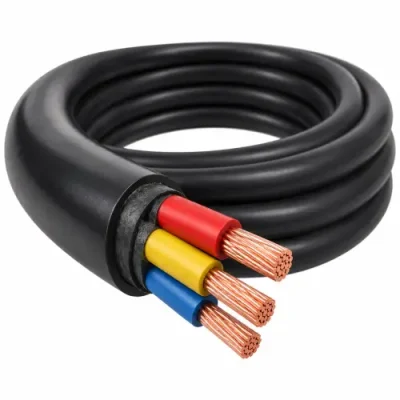
EPR Cables use ethylene propylene rubber-based insulation around electrical conductors. This insulation material is commonly selected for cable designs requiring a combination of dielectric strength, flexibility and thermal performance. Depending on the application, the cable may feature stranded copper or aluminium conductors, EPR insulation, additional protective layers and an outer sheath.
The complete cable construction determines where it can be installed. Some EPR-insulated products are designed for industrial power systems, while others are developed for flexible equipment connections or specialised environments. EPR insulation alone does not establish whether a cable is suitable for direct burial, outdoor exposure, oil contact or continuous movement.
Powertech Distributor helps buyers enquire about EPR Cable options by considering the required voltage class, conductor size, installation method and environmental conditions.
Engineering Characteristics of EPR-Insulated Cables
- Electrical insulation performance: EPR compounds are formulated to provide electrical separation between conductors and surrounding components.
- Flexibility: Suitable constructions can accommodate cable routing where easier handling and bending are required.
- Thermal capability: EPR insulation grades are available for defined operating temperatures, subject to the cable’s design and rating.
- Moisture resistance: EPR-based insulation offers useful resistance to moisture, although the complete cable’s suitability depends on its construction.
- Mechanical adaptability: Stranded conductor arrangements and suitable sheathing can support installation in selected industrial environments.
- Multiple cable designs: EPR-insulated products may be available in different conductor materials, core configurations and voltage ratings.
These characteristics vary by manufacturer and cable series. The product datasheet should be used to confirm actual performance limits and installation suitability.
Where EPR Cable Can Offer an Advantage
EPR Cable is often considered when an installation needs a balance of insulation performance, thermal capability and flexibility. Its suitability depends on matching the cable specification to the operating conditions.
- Industrial power connections: Appropriate cable designs can be selected for power distribution and electrical equipment connections.
- Challenging installation layouts: Flexible EPR-insulated constructions may be useful where the cable route requires controlled bending during installation.
- Temperature-variable environments: Certain grades are designed to operate within specified thermal limits, making them candidates for equipment exposed to changing temperatures.
- Moisture-exposed locations: Cables with suitable overall construction can serve applications where moisture resistance is required.
- Equipment and plant maintenance: Correctly specified EPR cables can be considered when replacing existing cables in industrial electrical systems.
A suitable cable must also meet the system’s current capacity, short-circuit requirements, voltage rating and mechanical protection needs. EPR insulation does not automatically make every cable suitable for every industrial environment.
Technical Specification Checklist
Parameter | Details to verify |
Insulation material | Ethylene propylene rubber (EPR) compound |
Conductor material | Copper or aluminium, depending on cable design |
Conductor construction | Solid or stranded, as specified |
Core arrangement | Single-core or multicore |
Rated voltage | Appropriate to the electrical system |
Conductor cross-section | Determined by load, installation and voltage-drop requirements |
Operating temperature | Confirm the manufacturer’s continuous and short-duration ratings |
Outer sheath | Material selected for the intended environmental conditions |
Installation method | Fixed installation or other specifically permitted use |
Standards and testing | Applicable IS, IEC or project requirements supported by product documentation |
Exact values depend on the selected product. Before ordering, confirm voltage rating, current capacity, conductor size, temperature limits, short-circuit performance and required compliance documents.
Quick Links
- Power Cable
- Armoured Cable
- Submersible Cable
- Single Core Cable
- Copper Wire Cable
- Fire Survival Cable
- Multi Core Cable
- Silicon Rubber Cable
- Heat Resistant Cable
- Thermocouple Compensating Cable
- EPR Cable
- Coaxial Cable
- HOFR Cable
- Solar Cable
- Control Cable
- Rubber Cable
- Instrumentation Cable
- Telecommunication Cable
- House Wiring
- LT Cable
- HT Cable
- Green Wire
- Aerial Bunch Cable
- Flexible Cable
- Rubber Trailing Cable
Industrial Sectors Using EPR Cables
EPR-insulated cable designs are used in various electrical applications where the cable’s verified ratings meet the system requirements.
- Manufacturing plants: Power connections for production equipment and industrial machinery.
- Power distribution systems: Selected electrical connections within compatible distribution installations.
- Process industries: Connections for equipment used in continuous manufacturing operations.
- Mining and heavy industry: Suitable cable types for specified demanding operating conditions.
- Infrastructure projects: Electrical installations requiring documented insulation and voltage performance.
- Pump and motor installations: Connections where the selected cable is approved for the equipment and installation method.
- Industrial maintenance: Replacement cables selected to match the original system’s electrical and environmental requirements.
- Specialised equipment: Connections requiring a particular combination of flexibility, thermal rating and insulation properties.
Source EPR Cable Through Powertech Distributor
Powertech Distributor supports cable procurement enquiries from electrical contractors, industrial buyers, maintenance departments and project purchasing teams across Kolkata, West Bengal, Odisha, Jharkhand, Bihar, Chhattisgarh and Assam, including Patna and Ranchi.
To help identify an appropriate EPR Cable, customers can share the operating voltage, required conductor size, number of cores, cable length and intended installation environment. These details make it easier to evaluate available options against the actual application rather than relying on a general product description.
Whether you are planning a new installation or sourcing replacement material, Powertech Distributor welcomes enquiries for EPR-insulated cables and related electrical cable requirements.
Request an EPR Cable Quotation
Choosing the right EPR Cable starts with understanding the electrical load, installation conditions and insulation requirements of your project. Contact Powertech Distributor to enquire about available cable configurations, discuss your technical requirements and request a competitive quotation. Bulk procurement enquiries are welcome for projects across the service regions.