
Thermocouple Compensating Cable Supplier
Thermocouple Compensating Cable Supplier in Kolkata, Odisha, Jharkhand, Bihar, Patna, Chhattisgarh, Ranchi, West Bengal and Assam
Accurate temperature measurement depends not only on the thermocouple sensor but also on the cable connecting it to the measuring instrument. Powertech Distributor caters to industrial buyers looking for Thermocouple Compensating Cables for temperature monitoring, process automation and instrumentation systems. These specialised cables are designed to transmit thermocouple signals while helping maintain measurement accuracy when the cable type is correctly matched to the sensor and reference conditions. We serve procurement requirements across Kolkata, Odisha, Jharkhand, Bihar, Patna, Chhattisgarh, Ranchi, West Bengal and Assam for a wide range of industrial applications.
The Role of Thermocouple Compensating Cable in Temperature Measurement
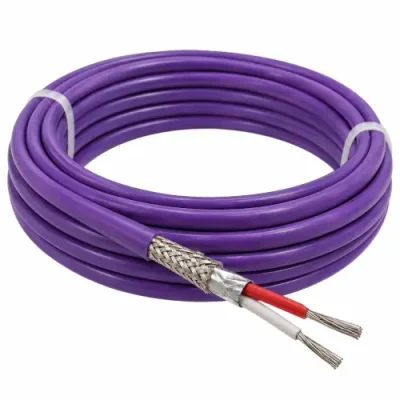
A Thermocouple Compensating Cable connects a thermocouple to an indicator, controller, recorder or other temperature-measuring instrument. It uses conductors with specified thermoelectric properties to reproduce or compensate for the signal characteristics of the associated thermocouple over a defined temperature range.
These cables are commonly identified by thermocouple type, such as K, J, T or other compatible sensor classifications. The correct cable must match the thermocouple’s requirements, polarity and applicable temperature limits. Compensating cables are not universally interchangeable with thermocouple extension cables, so the distinction should be checked against the instrument and cable documentation.
Powertech Distributor helps buyers enquire about instrumentation cable options according to sensor type, installation environment and process requirements.
Features That Support Reliable Instrumentation
- Thermocouple-specific conductor pairing: Conductor materials are selected to suit a designated thermocouple type and its signal characteristics.
- Signal transmission: The cable carries the low-level thermoelectric signal from the sensor to the measurement device.
- Polarity identification: Colour coding and conductor markings, where provided, assist with correct terminal connections.
- Insulation choices: PVC, silicone rubber, PTFE or other insulation materials may be available depending on the product and operating conditions.
- Screening options: Certain constructions incorporate shielding to help reduce the effects of electrical interference when installed correctly.
- Multiple cable configurations: Available products may vary by conductor size, number of pairs, insulation type and overall sheath construction.
The cable’s accuracy contribution depends on its material classification, temperature range, routing and installation. Shielding does not eliminate every source of interference, and grounding should follow the system design.
Selecting the Right Cable for Your Temperature Sensor
Choosing a compensating cable requires more than checking its dimensions. Buyers should establish compatibility with the thermocouple and measuring instrument before placing an order.
- Sensor compatibility: Confirm the thermocouple type and whether the system specifies compensating or extension-grade cable.
- Operating temperature: Check the permitted temperature range for both the conductors and the insulation, particularly near hot process equipment.
- Signal integrity: Consider cable length, electrical interference, grounding arrangements and instrument input requirements.
- Environmental protection: Identify whether the cable will face moisture, chemicals, abrasion, oil or outdoor exposure.
- Installation arrangement: Select the required number of pairs, conductor cross-section, shielding and sheath construction according to the layout.
- Documentation: Verify conductor identification, material classification, calibration-related requirements and applicable standards through the manufacturer’s datasheet.
Technical Details to Confirm Before Ordering
Parameter | Selection considerations |
Cable category | Thermocouple compensating or extension cable |
Thermocouple compatibility | Type K, J, T or another specified sensor type |
Conductor materials | Defined by the thermocouple type and cable classification |
Conductor arrangement | Single pair, multiple pairs or other available configurations |
Insulation | PVC, silicone rubber, PTFE or another specified material |
Shielding | Unshielded or screened construction, according to application |
Outer sheath | Selected according to environmental and mechanical requirements |
Operating temperature | Confirm conductor and insulation limits separately |
Cable identification | Colour code and polarity markings according to the applicable specification |
Compliance | Applicable standards and manufacturer documentation |
The available construction and exact ratings depend on the cable model. Confirm compatibility and technical specifications before procurement; not every compensating cable supports every thermocouple type or temperature range.
Quick Links
- Power Cable
- Armoured Cable
- Submersible Cable
- Single Core Cable
- Copper Wire Cable
- Fire Survival Cable
- Multi Core Cable
- Silicon Rubber Cable
- Heat Resistant Cable
- Thermocouple Compensating Cable
- EPR Cable
- Coaxial Cable
- HOFR Cable
- Solar Cable
- Control Cable
- Rubber Cable
- Instrumentation Cable
- Telecommunication Cable
- House Wiring
- LT Cable
- HT Cable
- Green Wire
- Aerial Bunch Cable
- Flexible Cable
- Rubber Trailing Cable
Industries That Depend on Thermocouple Compensating Cables
Thermocouple Compensating Cables are useful wherever temperature sensors must communicate with monitoring or control equipment.
- Steel and metal processing: Temperature monitoring around furnaces, heat-treatment systems and related equipment.
- Chemical production: Signal connections for process-temperature measurement at designated monitoring points.
- Power plants: Sensor wiring for compatible plant instrumentation and equipment monitoring.
- Plastic and rubber manufacturing: Temperature feedback for extruders, moulding machines and heating zones.
- Food processing: Connections for temperature instrumentation in suitable processing systems.
- Ceramic and glass industries: Sensor-to-instrument wiring for kilns and thermal processing equipment.
- Laboratories and testing facilities: Thermocouple connections for temperature measurement and experimental setups.
- Industrial automation: Integration of compatible temperature sensors with controllers, recorders and data acquisition systems.
Powertech Distributor for Instrumentation Cable Requirements
Industrial instrumentation requires careful coordination between sensors, cables and measurement devices. Powertech Distributor assists buyers sourcing Thermocouple Compensating Cables for projects and maintenance requirements across Kolkata, West Bengal, Odisha, Jharkhand, Bihar, Chhattisgarh and Assam, including Patna and Ranchi.
Customers can enquire with details such as thermocouple type, required cable length, insulation preference, shielding requirement and operating conditions. Sharing these specifications helps identify a more suitable product for the intended temperature-measurement system.
From replacement requirements to planned industrial installations, buyers can discuss their cable needs and request a quotation based on the required configuration and quantity.
Enquire About Thermocouple Compensating Cable Pricing
A compatible compensating cable helps preserve the intended signal relationship between a thermocouple and its measuring instrument. Contact Powertech Distributor to discuss product specifications, check available options and request pricing for your industrial or instrumentation project. Bulk enquiries from electrical contractors, maintenance teams and industrial purchasers are welcome.